GUIDE // KEYS + CUSTODY
Choosing a hardware wallet
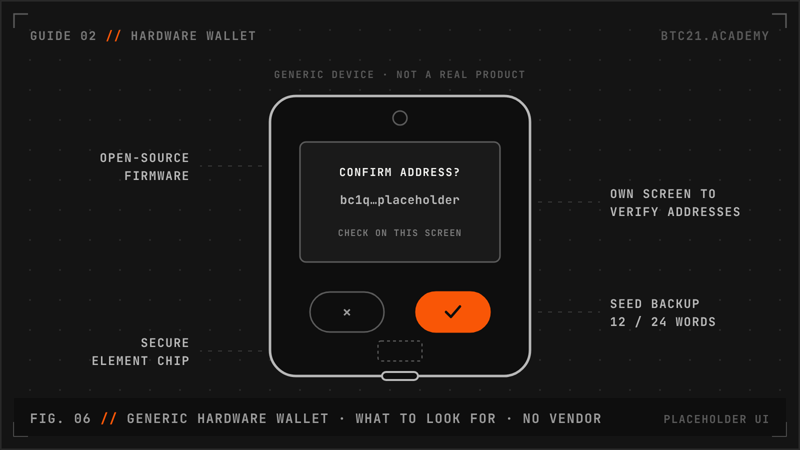
What to look for: open-source firmware, a secure element, and a seed backup.
Progress // Step 01 of 06
Saved on this device only
- 01 THE JOB
- 02 FIRMWARE
- 03 SCREEN
- 04 SUPPLY
- 05 SEED
- 06 REHEARSE
A hardware wallet keeps the keys off your everyday computer and shows you the spend on its own screen. Write down the amount you expect to hold, and whether anyone else must be able to sign. That decides single-sig or a quorum.
Open-source firmware means the code that handles the keys can be inspected by people who are not the maker. Closed firmware asks you to trust a binary. Prefer a device whose firmware is published, and whose releases are signed so the device can reject a tampered update.
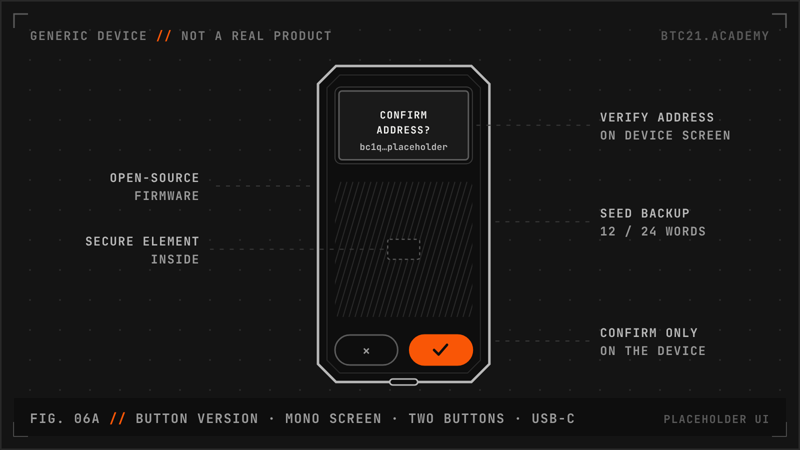
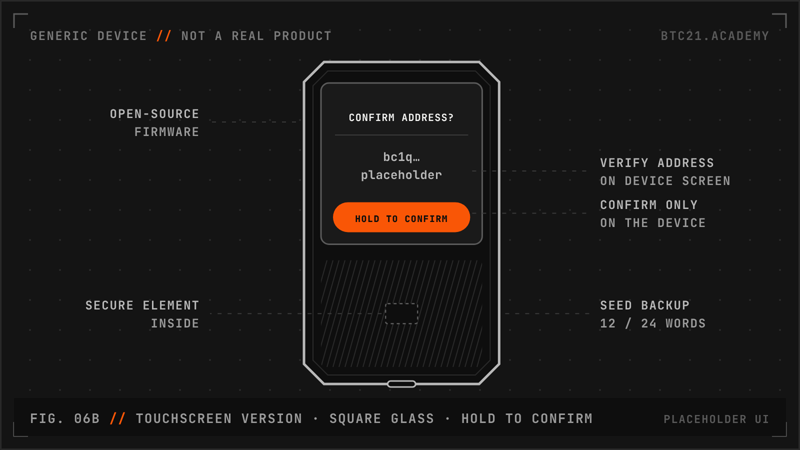
The computer can lie about an address or an amount. The device should show both on its own screen, and the keys should stay inside it. If you cannot check the address on that screen, you do not have the property you are paying for. Buttons or a touch screen are a preference, not a security property.
Order from the maker. A device that has already been set up, or that arrived with a seed phrase printed for you, is not yours. Check the packaging against the maker’s own instructions. A secure element makes physical extraction harder. It does not replace the screen, the firmware, or the backup.
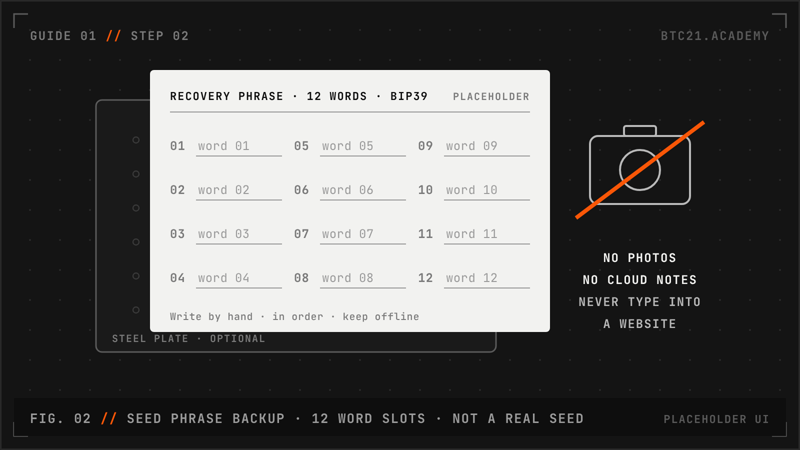
The device will show 12 or 24 words. Write them by hand. Metal survives fire and water better than paper if the amount justifies it. If you add a passphrase, back that up too, separate from the words. The words on a sticker in the box are a trap, not a convenience.
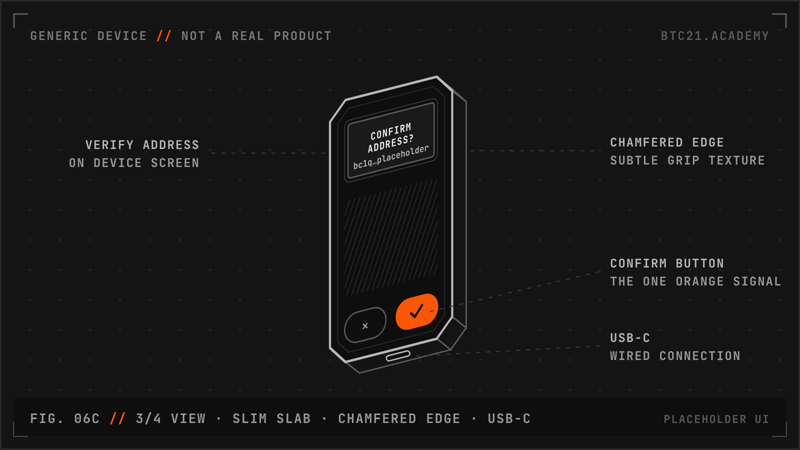
Receive a small test, then send it back out, reading every address on the device screen. Only then move an amount you would hate to lose. If you later use a quorum, save the descriptor with the same care as the seeds. The figures on this page show a generic device.
No invented stats.